More Than Property: The Emotional Pull of Old Houses on Korčula
There is a moment almost everyone experiences when they first begin seriously thinking about buying property on Korčula. You walk through narrow stone streets, pass through a small village scented with the sea, pine trees, and olive oil, and then suddenly notice a stone house that feels as though it has been quietly waiting there just for you.
Perhaps the shutters have faded under decades of salt and sun. Perhaps the terrace needs restoration, and the walls carry traces of generations of life and improvised repairs. But something about a house like that feels more real than any modern villa. As if you are not simply buying property, but stepping into something already alive.
And that is exactly why, in recent years, more and more people have started rediscovering the island’s old stone houses.
Because while new developments offer security and comfort, old houses on Korčula offer something far rarer today — authenticity.
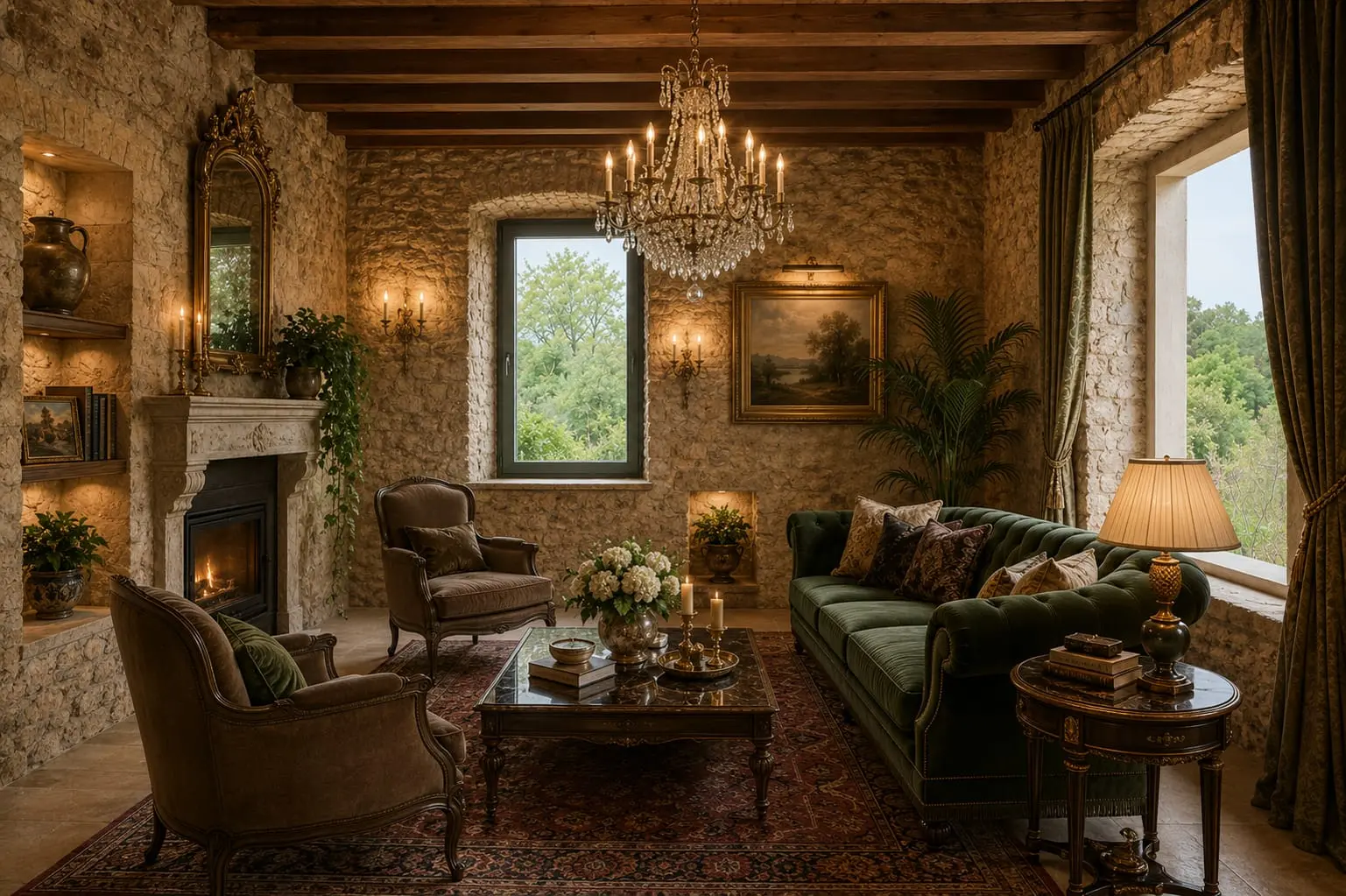
The Architectural Intelligence Behind Korčula’s Old Homes
Across the island, there are still traditional stone houses that have not lost their original character. These are not tourist backdrops or artificially created “Mediterranean-style” homes. They are houses shaped slowly over decades, built for life rather than for the market.
What is particularly fascinating is that many of these homes once belonged to wealthy island families — ship owners, wine and olive oil merchants, sailors, and families who spent generations building their lives between Korčula and the wider world.
Because of this, these houses were often built to a much higher standard than what people today imagine when they hear the phrase “old house for renovation.”
They were built to last.
The thick stone walls were not simply decorative features but a way of protecting interiors from heat and humidity. Houses were carefully positioned according to the sun and wind. Inner courtyards were designed as natural shelter from the summer heat. Wine cellars and storage rooms were planned to preserve wine, olive oil, and food throughout the year.
Even when neglected today, many of these homes still possess remarkably strong foundations — balanced proportions, thoughtful layouts, and architectural logic shaped by experience rather than trends.
And perhaps that is why old stone houses on Korčula often carry a feeling of permanence and gravity that modern construction sometimes lacks.
Many still have old wine cellars on the ground floor, thick stone walls that naturally keep interiors cool during the summer, inner courtyards, worn stone staircases, and wooden beams marked by time.
And that is where their true value lies.
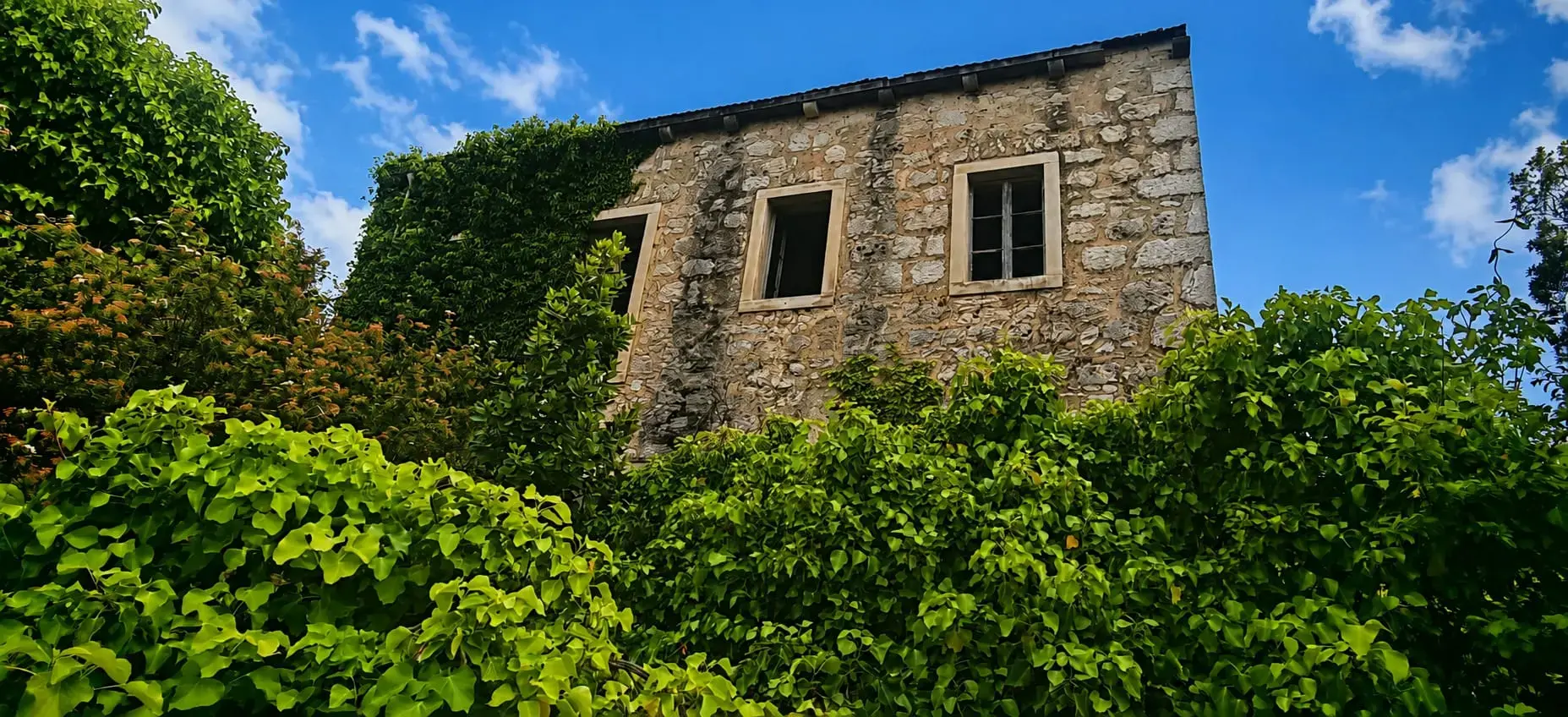
The Last Authentic Corners of the Mediterranean
At a time when many modern Mediterranean villas are beginning to look almost identical, old stone houses on Korčula still possess an identity that simply cannot be replicated.
But the real value of these homes often has very little to do with square meters, luxury materials, or market valuations.
Because when you buy an old house for restoration — especially on an island like Korčula — you are actually buying something that is almost impossible to recreate today.
You are buying a location shaped over generations. The shade of an old mulberry tree beneath which people sat for decades. Olive trees that existed long before tourism arrived on the island. Stone gardens and terraces that were designed not for aesthetics, but for life itself.
And that is why these houses are often worth far more than their “official” market value as properties for demolition or renovation.
The market can evaluate the condition of a roof, installations, or façades. But it cannot truly measure atmosphere.
It cannot measure the feeling of opening old wooden shutters on a summer morning and letting in the scent of the sea mixed with lavender and figs from the garden. It cannot measure the silence of a stone courtyard or the cool shade beneath a tree that has grown beside the house for over a century.
And those are precisely the things becoming most valuable today.
Perhaps their greatest advantage is not even the house itself.
But what surrounds it.
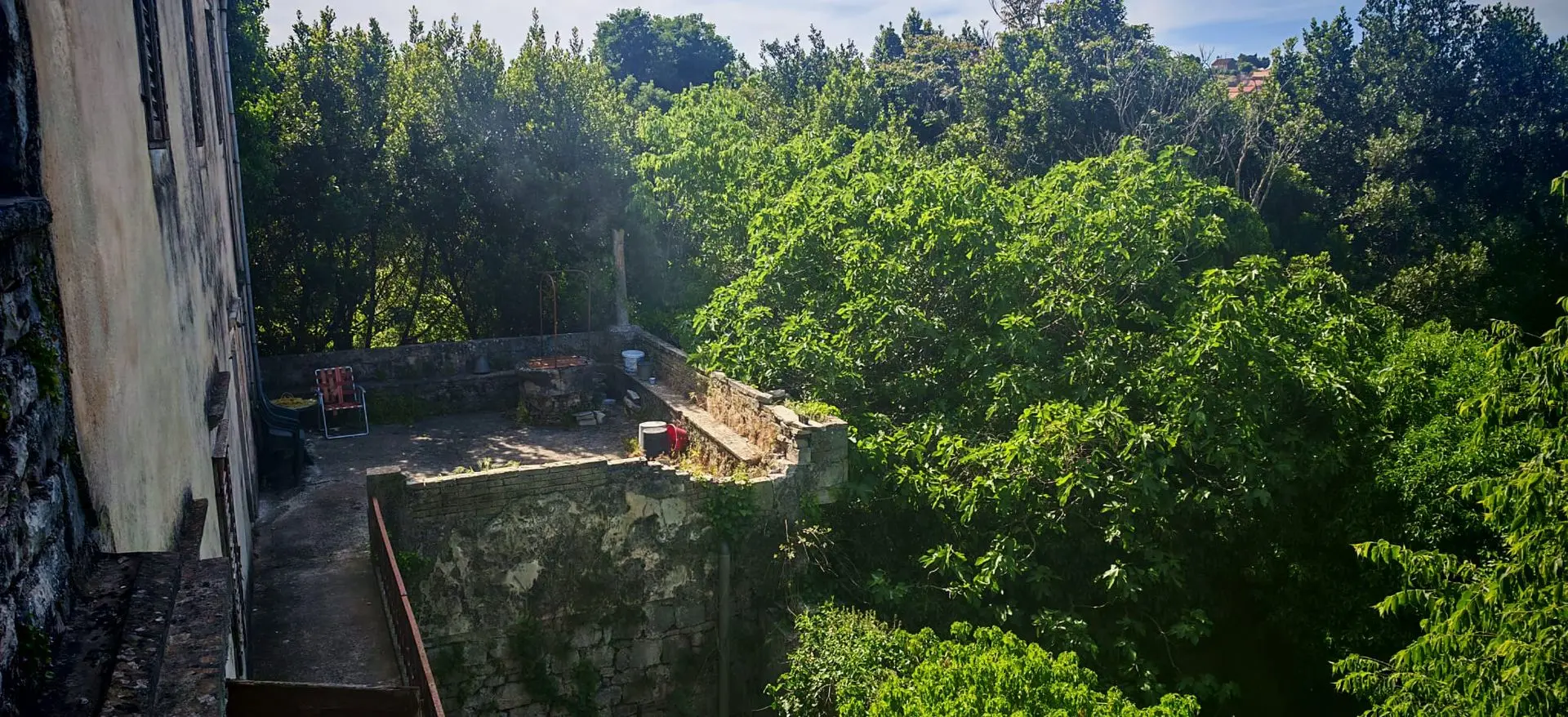
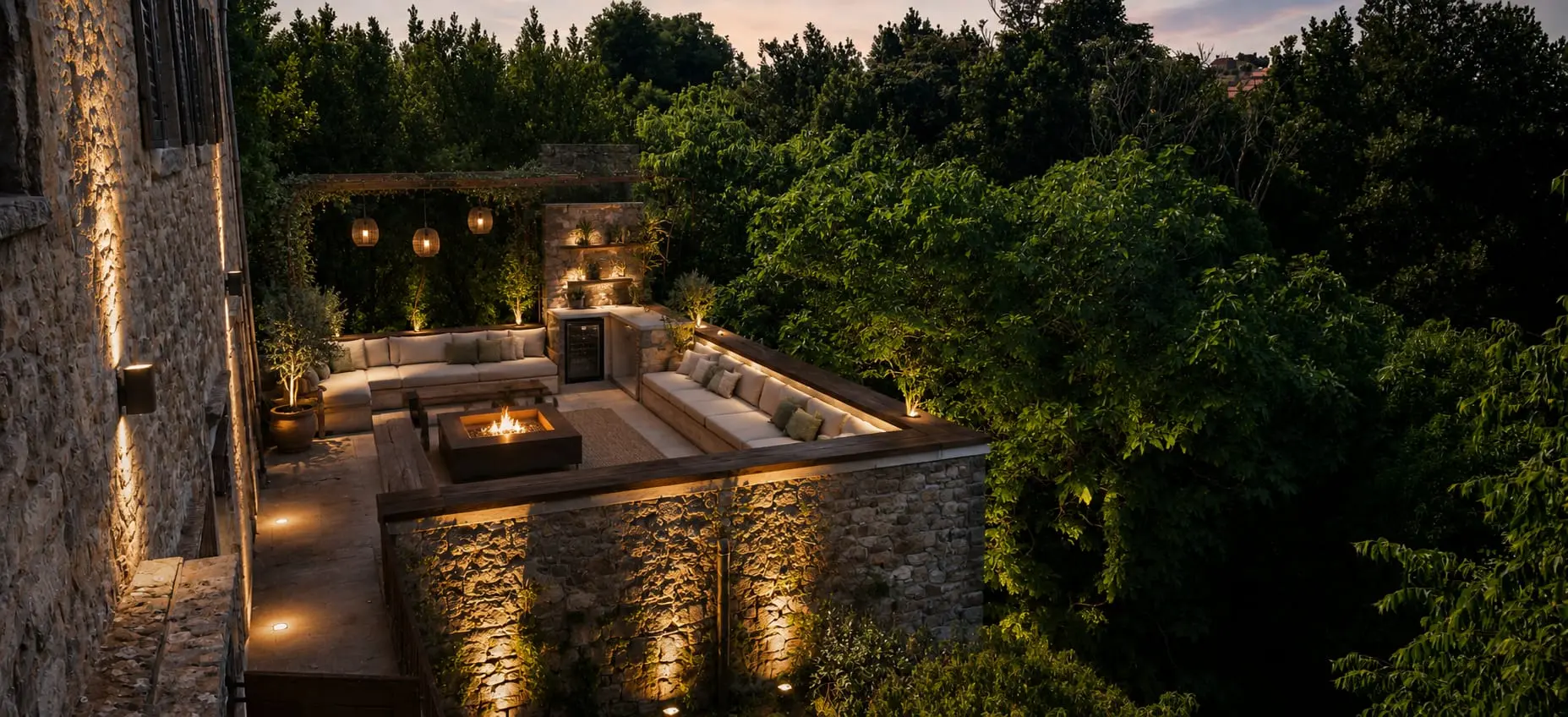
The Quiet Luxury of Century-Old Greenery
Old stone houses on Korčula are often embraced by century-old greenery that simply cannot be bought or recreated overnight. Large mulberry trees that have shaded courtyards for generations. Ancient olive trees shaped by time. Cypress trees, bougainvillea, fig trees, and gardens that feel as though they naturally grew together with the house itself.
It is the kind of Mediterranean atmosphere that modern developments struggle to imitate, no matter how refined the architecture may be.
Because a newly planted garden never carries the same feeling as a place where nature and architecture have evolved together for fifty or a hundred years.
And that is why old houses on Korčula often feel calmer, warmer, and more natural than newly built villas that may be architecturally perfect but still lack a sense of life around them.
What is equally special is that many island villages have preserved the feeling of genuine island life. In the evenings, people still talk outside their homes. Neighbours still know one another. Small markets and taverns are not staged experiences for tourists — they remain part of everyday life.
And increasingly, buyers searching for homes on the island are no longer looking only for sea views.
They are searching for a sense of belonging.
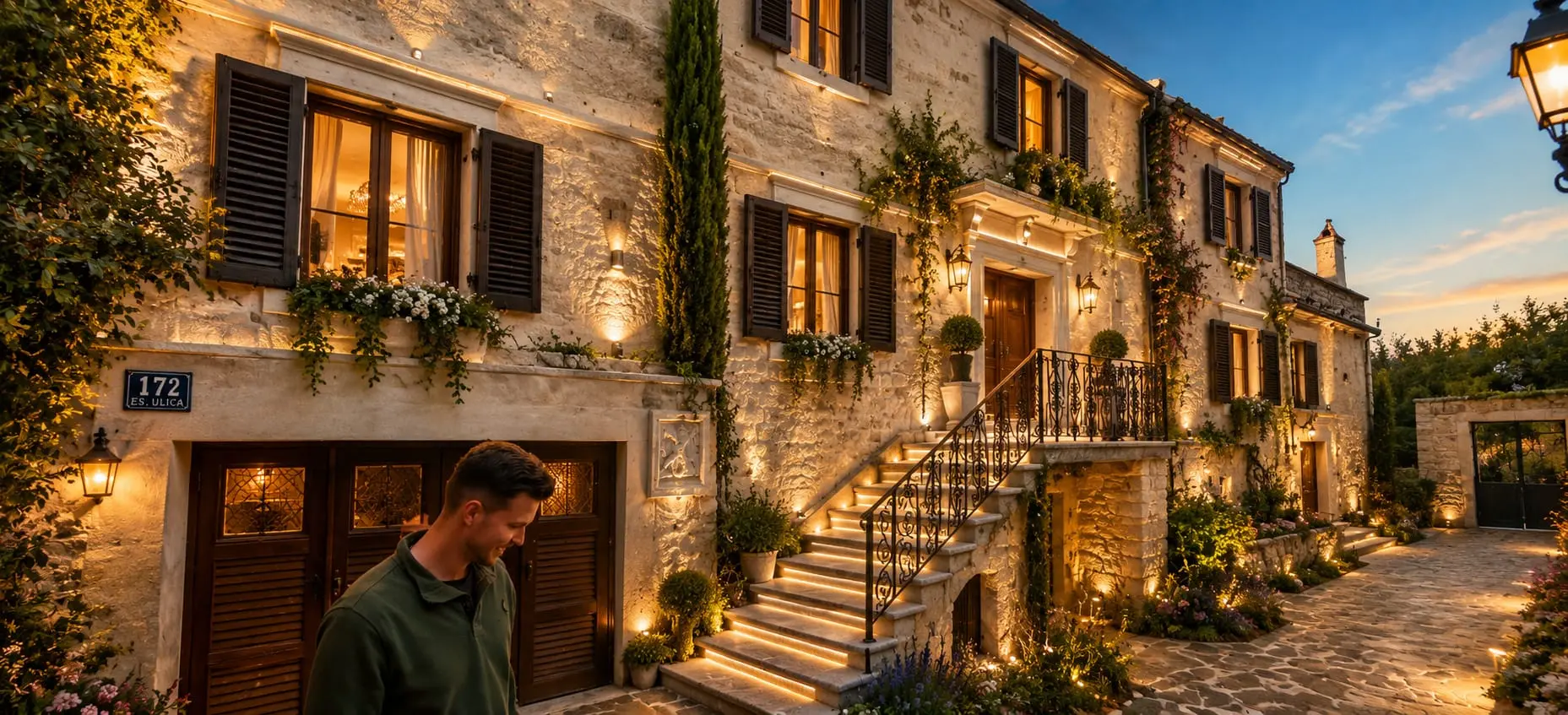
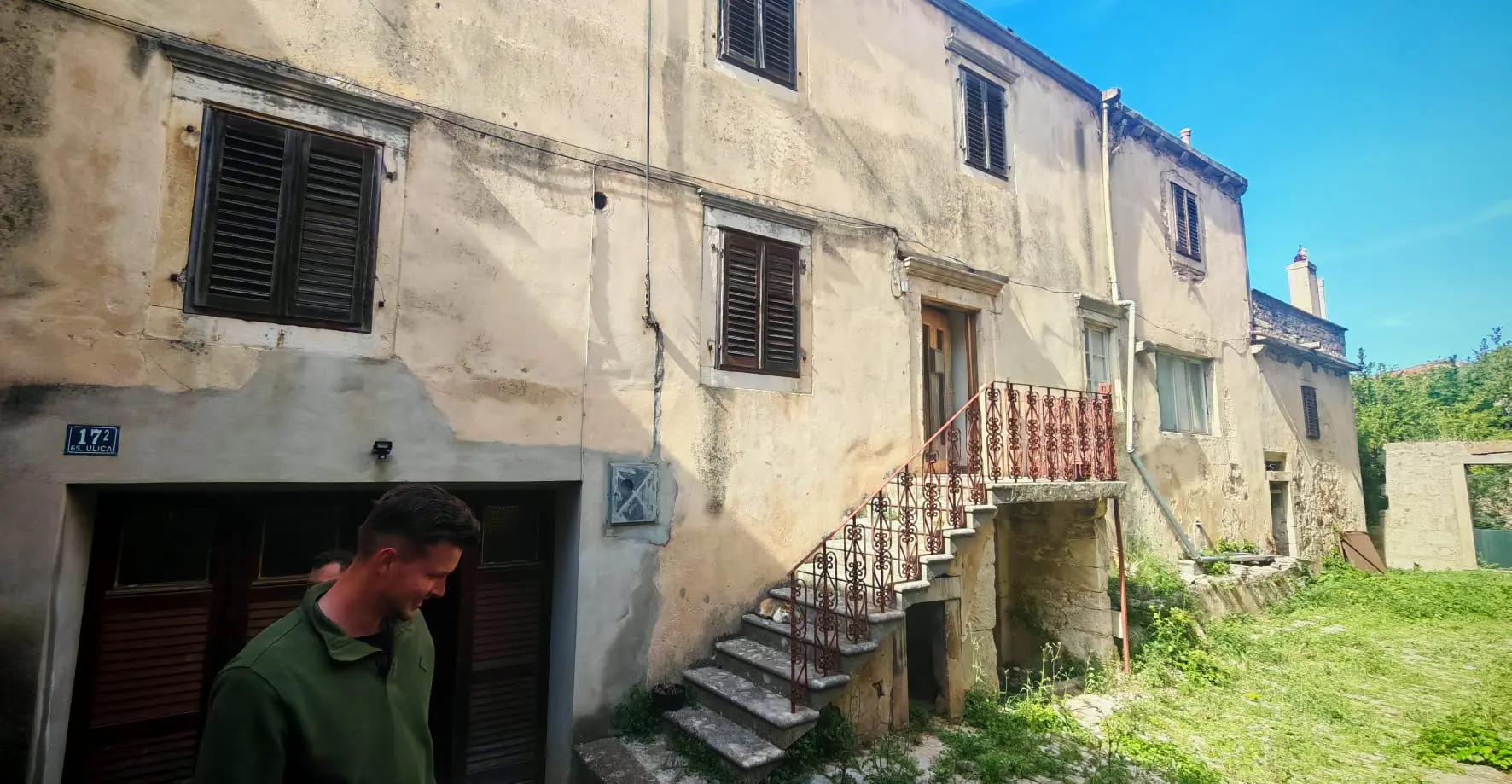
Old Stone Houses Demand More Than Money
Of course, the romance of restoring an old stone house usually lasts right up until the first serious construction work begins.
And that part of the story deserves honesty.
Renovating an old stone house is rarely simple. Behind the walls there are often outdated installations, moisture problems, improvised extensions, or structural issues that are almost impossible to fully predict before restoration begins.
On an island, everything moves more slowly. Materials are delayed. Skilled craftsmen are limited. Conservation regulations can postpone projects for months.
Yet interestingly, most people who go through the entire process eventually say the same thing — the renovation itself is what creates the deepest connection to the house.
Because old houses on Korčula demand more than money. They require patience, time, and a relationship with the space itself.
And perhaps that is exactly why they end up feeling so special.
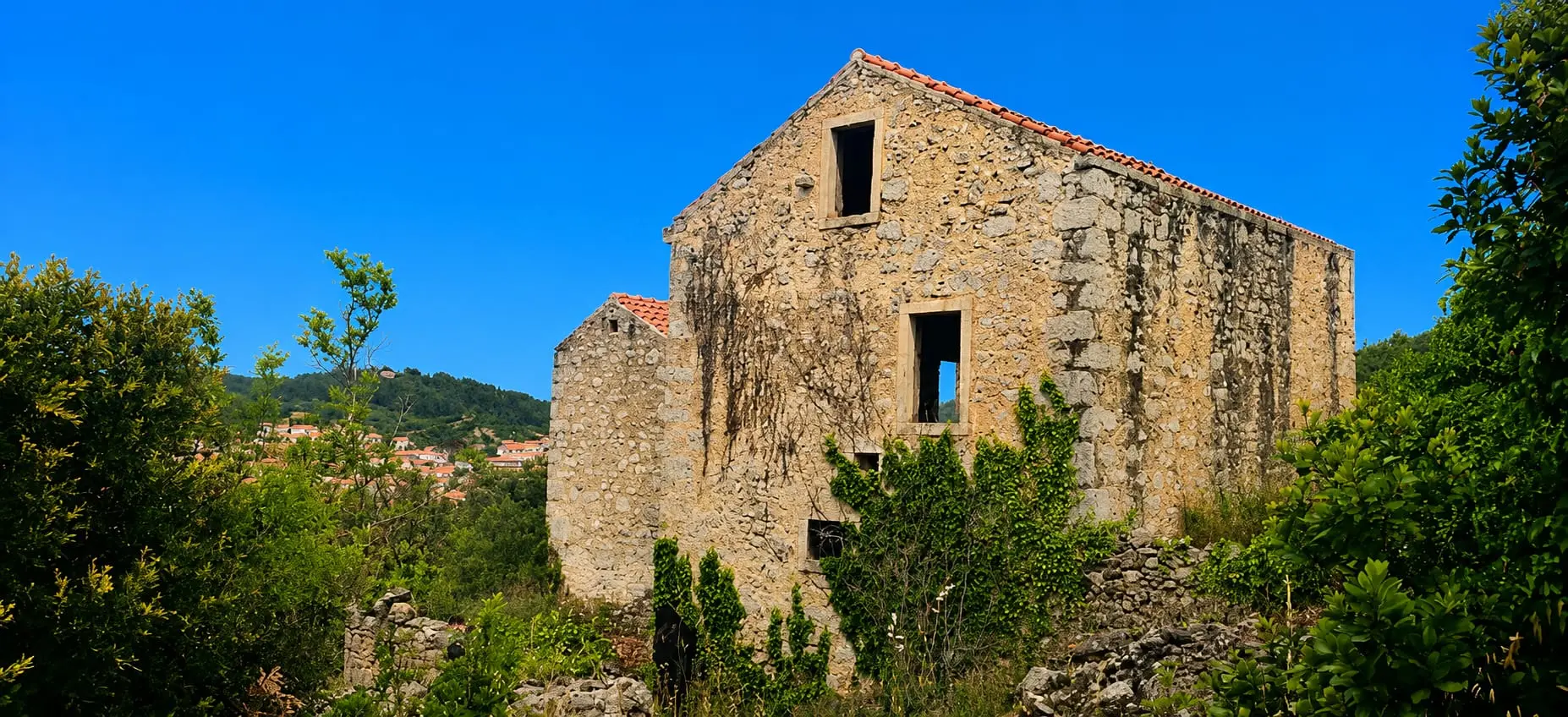
The Sustainability Question Behind New Development
Some of the greatest potential today lies in old stone houses located inland or in smaller villages that have not yet become fully saturated by tourism.
Smokvica, for example, has recently attracted buyers searching for a quieter and more authentic side of Korčula. Houses surrounded by stone gardens, old olive groves, and greenery are becoming increasingly valuable precisely because places like these are disappearing across the Mediterranean.
The same is true for the eastern side of the island, where there is still a sense of space untouched by excessive tourism.
And this is where old houses hold a major advantage over new developments.
Many occupy locations where construction today would no longer even be permitted — within historic village centres, beside small stone squares, surrounded by century-old trees and gardens that existed long before tourism ever arrived on the island.
This does not mean new developments lack advantages.
Modern homes offer simplicity. Everything is new, energy-efficient, and functional. There are no hidden costs behind old walls and no years-long restoration process. For many people, that sense of ease is the ultimate luxury.
But on islands like Korčula, another question has increasingly emerged in recent years — how sustainable is it, in the long term, to continue building new houses while leaving old stone homes to slowly decay?
Because island space is not unlimited.
Every new house means another intervention in a landscape that evolved naturally and harmoniously over centuries. New roads, new infrastructure, and the gradual disappearance of the authentic image of the island that people come to Korčula to experience in the first place.
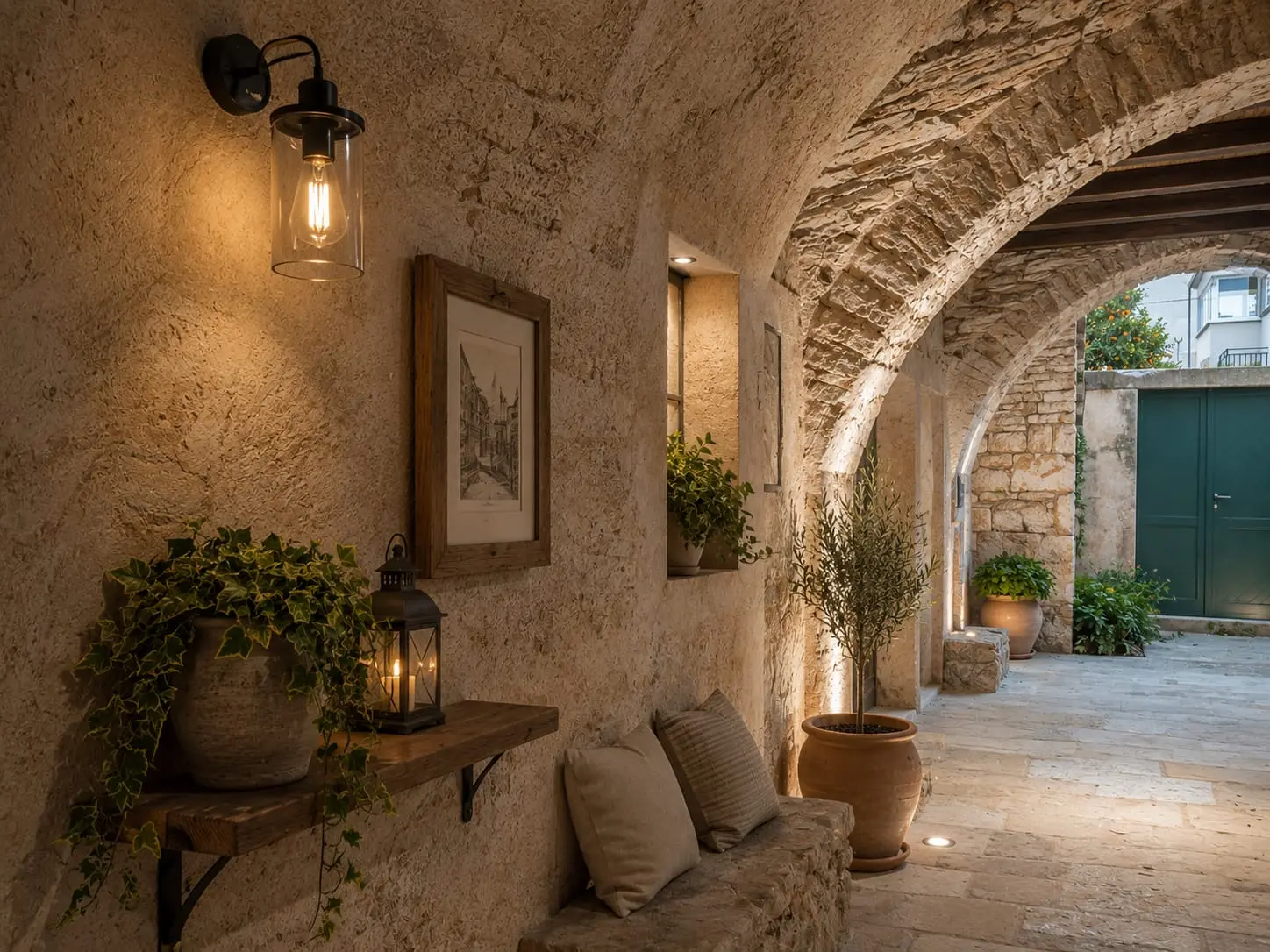
Old stone houses, on the other hand, already belong to that landscape. They are not foreign objects placed into it, but natural extensions of it. Built from local stone and adapted to the climate and Mediterranean way of life long before air conditioning or energy-efficiency concepts even existed.
And perhaps this is why restoring old houses on the island today carries another kind of value — not only aesthetic or financial, but cultural and ecological as well.
Because true sustainability on an island may not lie in endlessly building something new.
Perhaps sustainability lies in preserving what already exists.
Especially because many old houses on Korčula are not simply buildings — they are part of the island’s identity. When an old stone house surrounded by olive trees, gardens, and century-old greenery disappears, it is not just one property that is lost.
A piece of the Mediterranean disappears with it — something that can never truly be rebuilt.
And perhaps that is exactly why more and more buyers, especially international ones, are once again turning toward old stone houses.
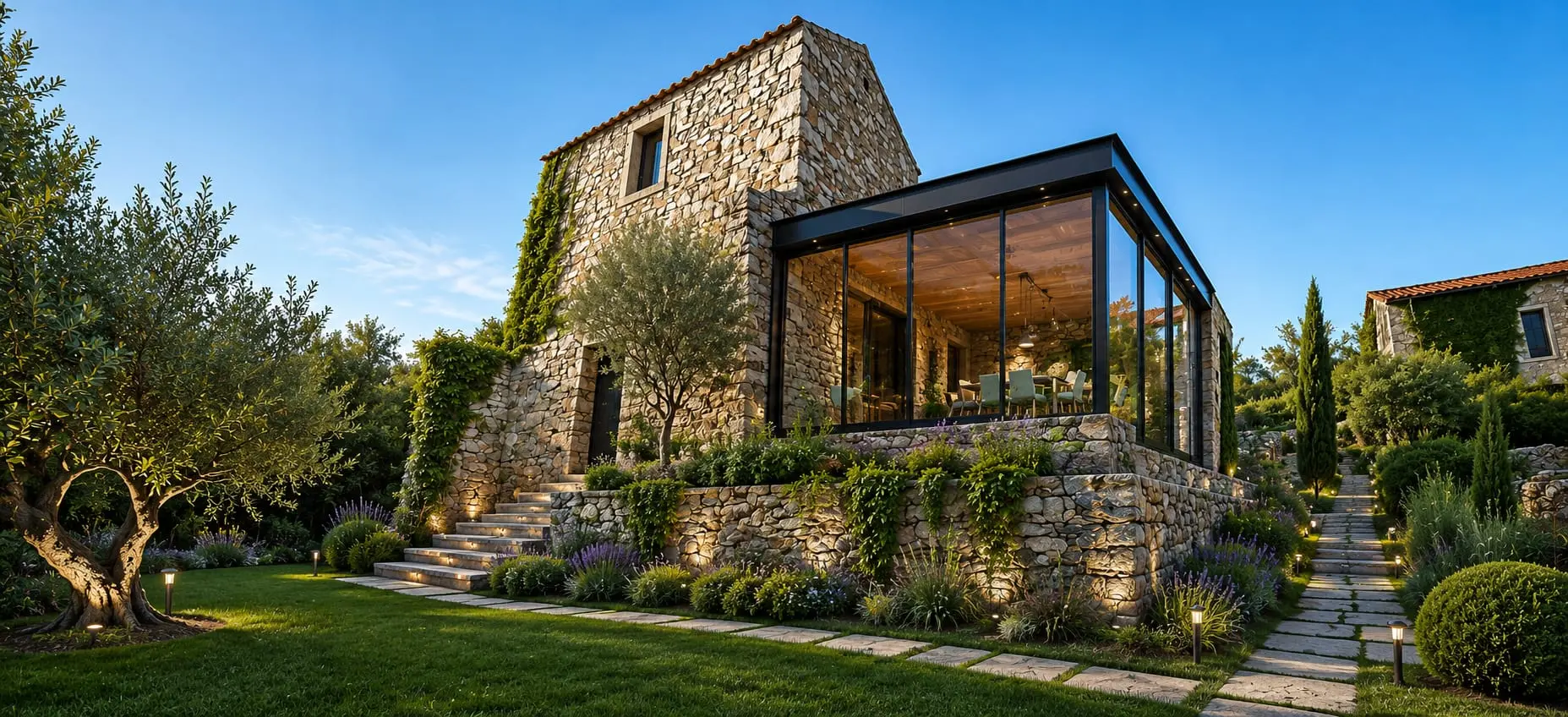
Why Old Stone Houses Are More Than Investments
Today’s travellers are no longer searching only for accommodation. They are searching for experience. They want mornings in a house with history. Dinners on a stone terrace beneath the shade of an old mulberry tree. A feeling that they are staying somewhere that could never have been built yesterday.
That is why a carefully restored stone house today often achieves greater emotional and market value than many contemporary villas.
Not because it is more perfect.
But because it feels more real.
Perhaps that is the greatest shift happening on Korčula today. People are no longer searching only for luxury in the traditional sense. Increasingly, they are searching for authenticity, peace, and places with genuine identity.
And old stone houses on the island still offer exactly that.
Which is perhaps why restoring an old stone house on Korčula today feels like something more than an investment.
Perhaps it is also a way of preserving at least a small part of the Mediterranean as it once was.